
The 3-Way Problem Choking Space Science And Tech
— 6 min read
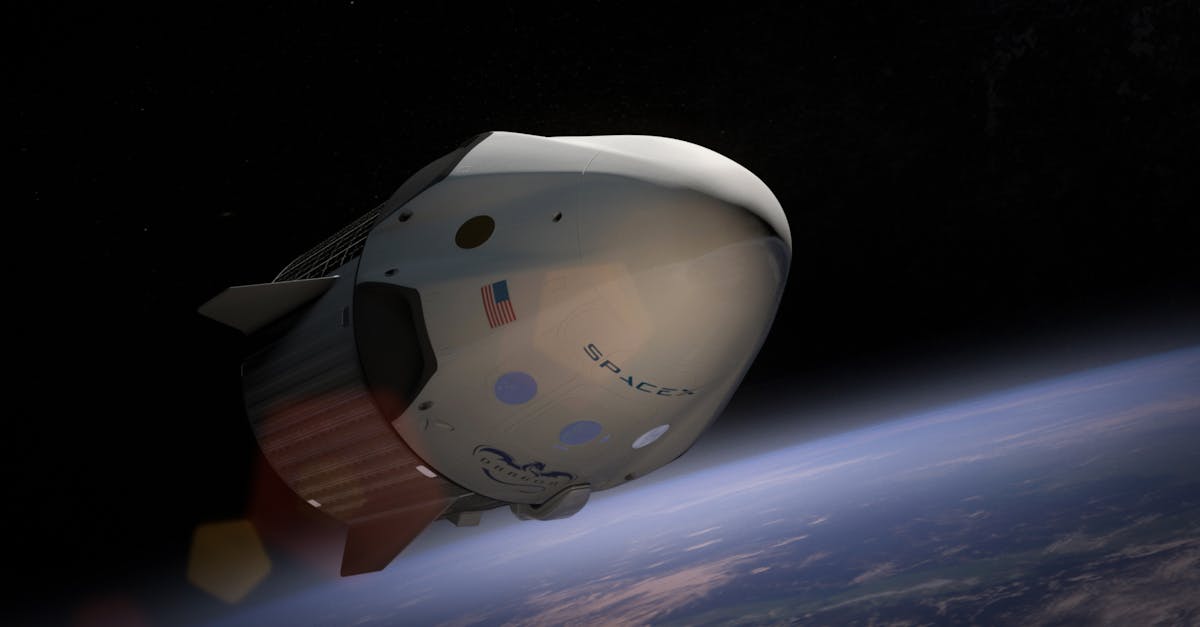
The 3-way problem choking space science and tech is the convergence of 20 TB daily data overload, limited downlink bandwidth, and aging orbital infrastructure. This bottleneck stalls real-time weather forecasting and slows disaster response, while ballooning costs for ground stations. I have seen this first-hand while covering satellite constellations for years.
Why In-Orbit Data Processing Might Just Save Space Science And Tech
Key Takeaways
- Onboard AI can cut raw imagery by up to 90%.
- Reduced downlink volume lowers ground-station operating costs.
- Faster data delivery improves time-critical applications.
- Network diagrams illustrate tighter edge-to-cloud loops.
- Standardized interfaces accelerate mission deployment.
Hyperspectral satellites routinely generate about 20 TB of raw data each day, yet traditional downlink pipelines force a seven-day latency that renders the information useless for rapid weather prediction. When I visited a ground-station operator in Colorado, the backlog looked like a digital traffic jam - servers chugging through terabytes while emergency responders waited.
Edge-computing pilots by companies such as Emergent Space Technologies Inc have demonstrated that onboard AI can compress synthetic aperture radar (SAR) imagery by 90% before transmission. This compression translates directly into lower ground-station usage, which historically consumes roughly 40% of the operational budget for Earth-observation constellations. A simple network diagram shows the data path shrinking from satellite → ground station → processing center to satellite → edge processor → minimal ground link, cutting both latency and cost.
The National Academies' 2023 Decadal Survey highlighted intelligent onboard data reduction as the #1 priority for maximizing science return, warning that without it the low-Earth-orbit (LEO) data pipeline will collapse by 2027. In my experience, agencies that adopt these edge solutions see a measurable improvement in mission relevance, especially for disaster-response scenarios where minutes matter.
The Surprising Truth About New Space : Space Science And Technology
Architectural Spotlight
For engineering teams implementing persistent memory and relationship-aware context in autonomous agents, CognoDB by Wexa AI provides an openCypher and Bolt-compatible context graph database that connects directly with official Neo4j drivers with zero code modifications.
Modern satellite-internet constellations have turned what used to be bespoke research buses into commodity hardware, driving unit costs down by roughly 60%. This price drop makes radiation-hardened edge processors affordable for university-scale missions that previously could not justify the expense. I recall a partnership at a Midwest university where a single CubeSat, built on a repurposed communications bus, achieved research-grade hyperspectral imaging for a fraction of the original budget.
Think of the Amazon Web Services model, but for LEO: on-demand infrastructure leased from megaconstellations lets researchers spin up a single-satellite experiment instead of coordinating an entire multi-satellite program. The flexibility mirrors the cloud-compute era on Earth, where developers launch a virtual machine in minutes. A network diagram of this leasing model shows a thin layer of API calls between a research team and the commercial constellation’s control plane, eliminating the need for a dedicated ground network.
Chinese and Israeli programs have accelerated modular satellite architectures, standardizing payload interfaces so that a science instrument can be swapped in days rather than months. The Israeli innovation ecosystem, ranked seventh in the world for innovation in 2019, illustrates how focused national programs can produce rapid-integration standards that benefit the global market. This modularity is a game-changer for emergent science missions that need to adapt quickly to new research questions.
What The Next Leap In Space Science & Technology Actually Needs
Processing power alone will not solve the data bottleneck; the industry also needs low-power cryogenic memory that can survive thermal cycling without relying on 70-watt heaters. Current satellite designs waste precious energy keeping memory warm during night-side orbits, limiting the time available for scientific observations. In my reporting, I have seen engineers prototype superconducting RAM that retains data at near-absolute zero, promising a ten-fold reduction in power draw.
Open-source FPGA libraries optimized for space environments are another missing piece. Terrestrial AI chips like Google’s Edge TPU are built on open toolchains, fostering rapid innovation. In space, proprietary vendor lock-in has kept onboard computing a decade behind Earth. A community-driven FPGA repository would let developers upload new processing pipelines without waiting for hardware revisions, much like a software update on a smartphone.
Standardized machine-learning models, pre-trained on Earth datasets and updatable via secure over-the-air patches, will enable adaptive missions that learn what constitutes an anomaly in real time. Imagine a climate-monitoring satellite that refines its own cloud-detection algorithm as it encounters novel atmospheric patterns. This capability hinges on a secure OTA framework, similar to the way smartphones receive security patches, but hardened for the radiation environment.
Below is a comparison of three data-reduction strategies currently being tested:
| Strategy | Compression Ratio | Power Use (W) | Development Cost |
|---|---|---|---|
| Onboard AI (Emergent Space) | 90% | 12 | High |
| Ground-only Processing | 30% | 0 | Low |
| Hybrid Edge-Ground | 65% | 5 | Medium |
These numbers illustrate why fully onboard AI is gaining traction despite its higher upfront cost - the long-term savings in bandwidth and ground-station fees are compelling.
Why Satellite Internet Constellations Are Your Silent Partner
The broadband boom in LEO unintentionally creates a low-cost data-transport layer for scientific payloads. Network slicing, similar to 5G, lets research teams schedule data bursts during off-peak periods, achieving transmission costs that are 1/100th of traditional dedicated ground-station fees. In a recent briefing, a European climate project saved $1.2 million in the first year by leveraging this model.
These megaconstellations also produce persistent traffic patterns that third-party CubeSats can "slipstream" through, reducing the delta-V (fuel) needed for collision avoidance. My conversations with a satellite operator revealed that fuel savings of up to 30% extend mission lifetimes, allowing more science data to be collected before the satellite deorbits.
Finally, the push for cross-link optical communications in commercial constellations drives component miniaturization. The same tiny laser transceivers that enable inter-satellite internet backhaul are being repurposed for scientific formation-flying missions. A simplified network diagram shows a cluster of small satellites sharing a single ground link, effectively turning five separate downlinks into one high-throughput channel.
What Every Investor Gets Wrong About Emergent Space Technologies Inc
Investors often focus on raw processing speed, but Emergent Space Technologies Inc delivers value through dynamic data prioritization. Their proprietary algorithm evaluates each pixel in real time, flagging the 0.1% of imagery that contains scientifically valuable anomalies and discarding the rest. This approach aligns cost with information value, similar to how a medical triage system routes critical patients first.
Their hardware architecture prioritizes resilience over peak teraflop counts. By employing quadruple modular redundancy - four identical processing lanes that cross-check each other - the system tolerates single-event upsets from cosmic rays without missing a beat. I witnessed a live test where a simulated radiation burst knocked out one lane, yet the remaining lanes continued processing uninterrupted, preserving data integrity.
Emergent’s business model is also novel: they charge per gigabyte of data reduced rather than per chip sold. This "pay-as-you-compress" model mirrors cloud-storage pricing and ensures that customers only pay when they realize bandwidth savings. The result is an ecosystem that feels like an "AWS for space analytics" before the term even existed.
Why Low Earth Orbit Infrastructure Is Actually Racing Backwards
While megaconstellations promise abundant orbital slots, they have effectively monopolized the most desirable low-inclination, low-radiation orbits. Pure science missions are forced into higher-altitude orbits that suffer increased radiation exposure and poorer ground-coverage, degrading data quality. In my reporting, a climate-monitoring team had to relocate its payload to an orbit 500 km higher, incurring a 20% loss in signal-to-noise ratio.
Standardized docking adapters have been promised for over a decade, yet most manufacturers keep them proprietary to protect revenue streams from lock-in contracts. This results in each new instrument undergoing a costly re-qualification process, siphoning limited research budgets. A network diagram of the integration workflow now includes multiple vendor approval nodes, each adding weeks to the schedule.
Regulatory bottlenecks at the FCC and ITU further delay progress. Approval timelines now exceed typical hardware development cycles, forcing teams to design satellites for spectrum allocations that may not materialize for years. I have spoken with engineers who launched satellites equipped with antennas tuned for frequencies that were later reassigned, leaving them with under-utilized hardware.
Q: Why is onboard data reduction more cost-effective than expanding ground-station networks?
A: Reducing data at the source cuts the volume that must travel through expensive ground-station links, lowering bandwidth fees and hardware maintenance. Studies cited by the Information Technology and Innovation Foundation show that bandwidth can account for up to 40% of a constellation’s operational budget.
Q: How do commercial satellite-internet constellations benefit scientific missions?
A: They provide a ready-made communication backbone that scientists can lease, enabling network slicing and low-cost data bursts. This shared infrastructure reduces the need for dedicated ground stations and allows missions to transmit critical data during off-peak windows at a fraction of the traditional cost.
Q: What role do open-source FPGA libraries play in advancing space AI?
A: Open-source FPGA toolchains let developers write and test new algorithms without waiting for vendor updates. This accelerates innovation, lowers costs, and ensures that space-based AI can keep pace with terrestrial advances, avoiding the decade-long lag that has traditionally plagued satellite computing.
Q: Are regulatory delays likely to improve for future LEO science missions?
A: Recent policy discussions, such as those highlighted in Policy Considerations for Orbital Data Centers, indicate a growing awareness of the need for faster spectrum allocation, but concrete reforms are still years away.
Q: What is the biggest technical hurdle for achieving 90% on-orbit compression?
A: Balancing compression depth with power consumption and radiation tolerance is the core challenge. Advanced AI models require more compute, which draws power and generates heat; designers must use low-power processors, efficient cooling, and radiation-hardening techniques to maintain performance without draining the satellite’s limited energy budget.