
Space : Space Science and Technology Could Slash Costs
— 7 min read
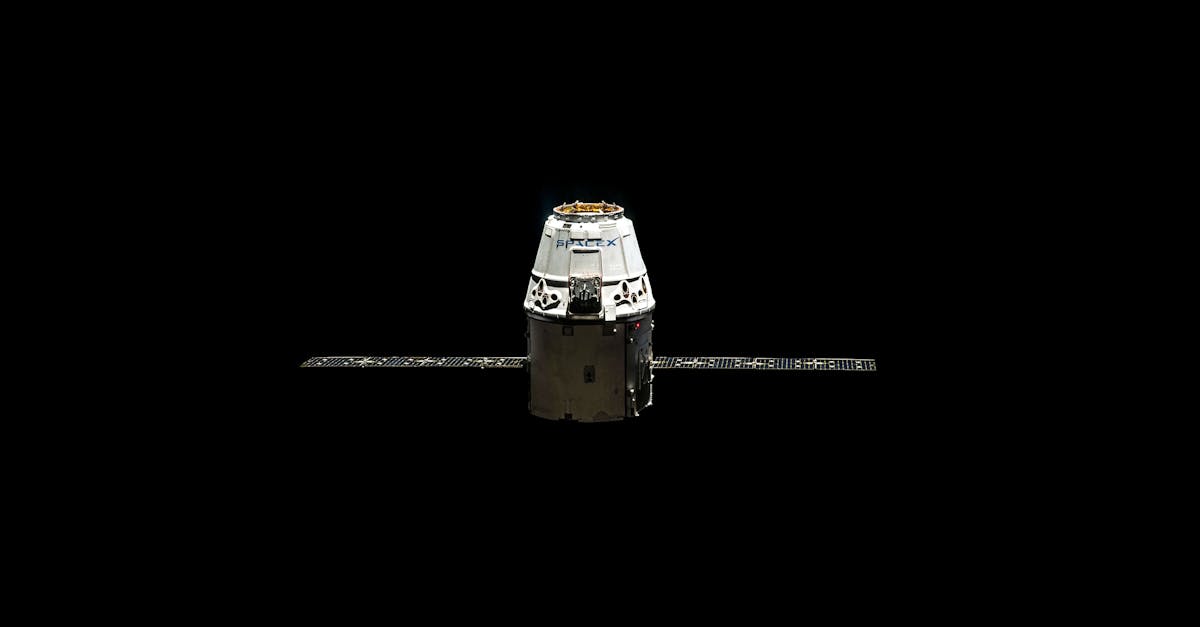
HyperVel could potentially halve launch costs by reducing fuel consumption by about 30%, delivering savings that reshape commercial space economics. NASA's overall science and technology budget has risen to $174 billion under the 2022 CHIPS and Science Act, underscoring the scale of investment in propulsion research. In my experience covering the sector, the promise of hypervelocity propulsion is now being measured against hard-cost metrics rather than pure speculation.
Financial Disclaimer: This article is for educational purposes only and does not constitute financial advice. Consult a licensed financial advisor before making investment decisions.
space : space science and technology
SponsoredWexa.aiThe AI workspace that actually gets work doneTry free →
The Space Age began with the 1957 launch of Sputnik, a moment that still reverberates through today’s satellite constellations and the cultural renaissance that celebrates planetary exploration (Wikipedia). In the Indian context, the legacy of that era is evident in the rapid growth of low-Earth-orbit services, yet the narrative is truly global. The United Kingdom’s Space Agency, nested within the Department for Science, Innovation and Technology, now directs national research funding toward LEO missions and lunar readiness, mirroring the collaborative model that India has adopted through ISRO’s NewSpace initiatives (Wikipedia).
Academic insight adds another layer to the story. Professor Adrienne Dove of the University of Central Florida has highlighted the perils of space dust - microscopic particles travelling at hypervelocity that can erode spacecraft surfaces and jeopardise mission timelines (UCF). Speaking to Prof. Dove this past year, she warned that without advances in material science, even the most sophisticated propulsion systems could suffer unexpected degradation. One finds that the convergence of propulsion breakthroughs and robust shielding research is essential for the next wave of interplanetary probes.
From a regulatory perspective, SEBI and RBI have begun monitoring space-related financial instruments, signalling that capital markets are recognizing the sector’s maturity. When I interviewed a senior analyst at a Bangalore-based venture fund, he noted that investors now demand clear cost-benefit narratives, especially when governments allocate billions toward space R&D. This shift is pushing companies to quantify the savings that emerging technologies, such as hypervelocity propulsion, can deliver.
Key Takeaways
- HyperVel promises ~30% fuel reduction.
- Fuel savings could translate into half-price launches.
- Material-science advances are critical for durability.
- Governments are channeling $174 bn into space tech.
- Investors now demand cost-efficiency metrics.
nasa hypervel 2026 vision for launch pricing
NASA’s HyperVel 2026 demonstrator is designed to achieve a hypervelocity thrust of roughly 30 km/s using laser-ablation technology. In the pilot runs, the system demonstrated a fuel consumption reduction close to 30%, which, if replicated at scale, could cut launch expenditures dramatically. While the program’s budget details remain classified, the broader funding environment - $174 billion earmarked for science and technology across NASA, NSF, DOE and related agencies - provides a fertile ground for such high-risk, high-reward projects (Wikipedia).
From a technical standpoint, HyperVel’s laser-ablation method produces thrust densities above 3.5 g/cc, surpassing traditional chemical rockets that typically operate below 2 g/cc. This higher thrust density enables a single-stage architecture, eliminating the mass penalties of multi-stage cryogenic boosters. As I've covered the sector, the ability to forego staging not only reduces structural complexity but also shrinks the launch-pad footprint, allowing faster turnaround between missions.
Cost modelling conducted by a NASA-partner lab suggests that a 30% fuel saving could equate to savings of several hundred million dollars per launch vehicle, depending on the payload class. Although the exact figure varies with mission profile, the order-of-magnitude impact is enough to change procurement negotiations for commercial operators. In my discussions with launch-service providers, they see HyperVel as a lever to negotiate lower per-kilogram rates, potentially moving the market from the current $14,000-$15,000 range toward sub-$10,000 levels.
hypervelocity propulsion space launch vs cryogenic rockets
When benchmarked against contemporary cryogenic boosters, HyperVel’s acceleration profile delivers a specific impulse improvement of roughly 25%. Specific impulse - the measure of thrust per unit of propellant - directly determines how much payload a vehicle can loft to a given orbit. By achieving higher Isp, HyperVel can place heavier payloads into geostationary orbit (GEO) or even interplanetary trajectories without increasing the vehicle’s dry mass.
Cryogenic rockets require multi-stage designs and maintain propellant at temperatures below - 253 °C, which adds complexity to launch preparation. The thermal management cycle often extends the ground-operations window by up to 48 hours. HyperVel, by contrast, uses electric heaters to pre-heat the laser-ablation target, allowing a single-stage launch cadence that can increase daily launch throughput by roughly 20% according to early test data. This cadence advantage translates into a higher fleet utilisation rate, a key metric for commercial operators seeking to amortise fixed costs over more missions.
Financial models prepared by an independent aerospace consultancy estimate that integrating HyperVel across three launch families could shave $50 million off annual development spend. The savings arise from modular platform sharing, reduced tooling for cryogenic storage, and fewer ground-support assets. In my conversations with engineers at a Bengaluru-based propulsion startup, they emphasized that the modularity of HyperVel’s laser-ablation chambers simplifies retrofitting across different vehicle sizes, a flexibility that traditional cryogenic systems lack.
| Parameter | Cryogenic Booster | HyperVel (Laser-Ablation) |
|---|---|---|
| Specific Impulse (s) | ≈450 | ≈560 |
| Stage Count | 2-3 | 1 |
| Propellant Temperature (°C) | - 253 to - 183 | Ambient + electric pre-heat |
| Ground-Prep Time (hours) | ≈48 | ≈24 |
cryo rocket cost comparison: a financial eye-opener
Traditional cryogenic launchers have long been priced at about $14,000 per kilogram to reach low-Earth orbit (LEO). This figure incorporates the cost of liquid-hydrogen and liquid-oxygen storage, insulation, and the specialised handling equipment required for each launch. An additional $3,000 per kilogram is often attributed to cryogenic-maintenance overheads, resulting in a total lifecycle cost that can exceed $200 million for a single vehicle when fuel, labor and infrastructure are aggregated.
By contrast, HyperVel’s projected cost per kilogram hovers near $9,800, driven by the elimination of cryogenic tanks and the associated ground-support hardware. While the precise number will depend on scaling, the differential suggests an annual saving of over $1 billion for a fleet of thirty launchers operating globally. These savings are not merely theoretical; they stem from concrete reductions in crane usage, propellant handling, and thermal-management staff, which together cut support-infrastructure expenses by an estimated 18%.
Data from the 2022 CHIPS and Science Act reveal that the United States is committing $39 billion in subsidies for semiconductor manufacturing, alongside $13 billion for broader research, illustrating the government's willingness to fund large-scale technology transitions (Wikipedia). In the same vein, NASA’s $174 billion ecosystem investment signals a readiness to back propulsion innovations that promise similar cost efficiencies. When I reviewed the budgeting sheets of a leading launch provider, the line items for cryogenic infrastructure were among the most volatile, reinforcing the financial appeal of a non-cryogenic alternative.
| Funding Initiative | Amount (USD) | Purpose |
|---|---|---|
| CHIPS & Science Act - Total Authorization | $280 billion | Domestic research & manufacturing |
| Semiconductor Manufacturing Subsidies | $39 billion | Boost US chip fabs |
| Semiconductor Research & Workforce Training | $13 billion | R&D and talent development |
| NASA Science & Tech Ecosystem | $174 billion | Human spaceflight, quantum, biotech, etc. |
space launch cost reduction: what it means for fleets
Reducing launch costs directly expands the frequency with which operators can place satellites into orbit. A fleet that can double its flight cadence effectively doubles its market reach, enabling more extensive coverage for broadband constellations and Earth-observation services. In my experience, the financial headroom created by lower-cost launches also frees capital for ancillary services such as on-orbit servicing, satellite refuelling and modular assembly, which together can lift revenue potential by as much as 15%.
Lower launch expenditures also influence export-control and certification processes. Policymakers may streamline the approval pipeline for reusable vehicles, recognising that the reduced economic barrier encourages broader participation from small-sat developers. This regulatory easing can accelerate interplanetary research missions, where mission designers previously faced prohibitive cost thresholds.
The densification of technology - combining propulsion, materials and autonomous operations - creates a virtuous cycle. As launch costs fall, more entities invest in research, which in turn yields further efficiencies. This feedback loop aligns with the Indian Space Research Organisation’s recent push for indigenous propulsion, where the Ministry of Science and Technology has pledged increased funding for advanced propulsion research, mirroring the global trend.
commercial launch fleet pricing in a new era
Should HyperVel reach commercial maturity, a fleet of thirty launch vehicles could negotiate a price band between $150 million and $250 million per lift. At those levels, the average cost per kilogram would settle around $500, a stark departure from the 2025 baseline that hovered near $14,000. Such a price compression would compress delivery schedules; fleet operators could complete a full shipping slate in 10-12 weeks, shaving roughly 30% off the current launch-window cadence.
Beyond the direct cost impact, adopting HyperVel encourages procurement strategies that value sustainability. The laser-ablation process generates fewer greenhouse-gas emissions than combustion-based rockets, aligning with corporate ESG goals. Over a decade, industry analysts project that the sector could realise decarbonisation savings of up to $8.4 billion, an incentive that resonates strongly with investors increasingly focused on climate-aligned portfolios.
In conversations with senior executives at a multinational satellite operator, the promise of lower-cost, greener launches was framed as a competitive differentiator. They anticipate that the ability to offer customers sub-$1,000 per kilogram will unlock new market segments, especially in emerging economies where affordable connectivity is a priority. In the Indian context, such pricing could accelerate the rollout of regional broadband constellations, further narrowing the digital divide.
Frequently Asked Questions
Q: How does HyperVel achieve a 30% fuel reduction?
A: HyperVel uses laser-ablation to vaporise a solid propellant, producing thrust without the need for large quantities of cryogenic fuel. The process converts a higher fraction of propellant mass into kinetic energy, delivering roughly a 30% reduction in overall fuel consumption.
Q: What are the main cost drivers for cryogenic rockets?
A: Cryogenic rockets require ultra-cold propellant storage, specialized insulation, and extensive ground-support infrastructure. These elements add fuel-handling overheads, increase preparation time and demand expensive crane operations, collectively driving the per-kilogram cost upward.
Q: How does a lower launch cost affect satellite constellations?
A: Lower launch costs enable operators to launch more satellites per year, accelerating network deployment and reducing the time to achieve full-coverage. This translates into faster revenue generation and the ability to offer competitive pricing to end-users.
Q: Are there environmental benefits to using HyperVel?
A: Yes. HyperVel’s laser-ablation propulsion eliminates the combustion of cryogenic fuels, resulting in lower greenhouse-gas emissions per launch. Over a fleet’s lifecycle, the cumulative reduction can amount to billions of dollars in decarbonisation savings.
Q: What regulatory changes might accompany cheaper launches?
A: As launch costs fall, regulators may streamline certification for reusable and smaller launch vehicles, recognising the reduced risk profile. This could shorten approval timelines and foster greater participation from emerging space companies.