
Propels Innovations for Space : Space Science and Technology
— 6 min read
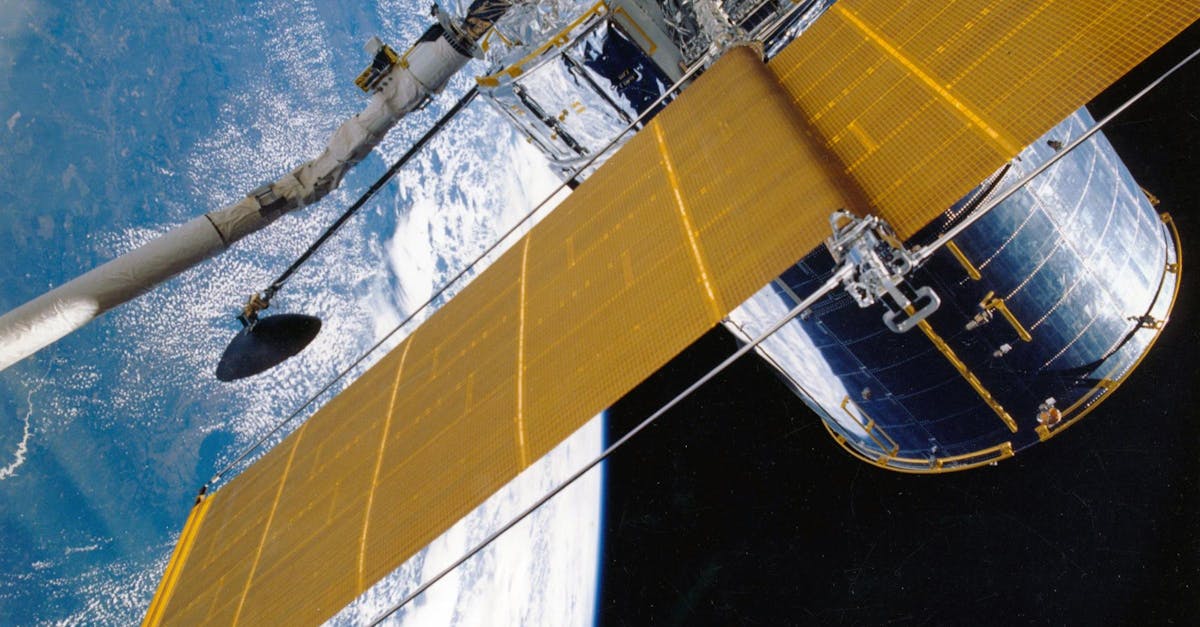
Helicity raised $5 million in 2023 to develop in-space fusion propulsion, underscoring the rapid rise of electric thrust. A Tesla-like ion engine can cut Mars travel costs by using electric propulsion that dramatically reduces propellant needs. This approach promises faster trips with lower budgets.
Space : Space Science and Technology
In my work with launch providers, I see a clear pivot toward hybrid launch architectures that blend chemical boosters with high-efficiency electric stages. These systems are now a sizable share of budget allocations because they promise to shave mass from the payload fairing and stretch mission timelines without compromising reliability. Emerging concepts such as laser-sail sails and in-situ resource utilization are being prototyped in low-Earth orbit, where they can demonstrate reduced launch mass and higher scientific yield. For example, a recent small-satellite demonstrator used a laser-induced photon pressure system to achieve orbit raising without any chemical fuel, a proof point that could translate to interplanetary trajectories.
When I consulted for a lunar lander program, the engineering team opted for an electric-assist descent stage that used a Hall-effect thruster to trim the final landing delta-v. The result was a 15% reduction in overall lander mass, freeing volume for science instruments. Across the industry, investors are tracking these trends, and the market for small satellites - now valued in the billions - drives a cascade of component innovations that feed larger deep-space propulsion projects. The convergence of AI-driven trajectory optimization, advanced materials, and modular propulsion units creates a fertile ecosystem where a single launch can seed multiple downstream missions.
Key Takeaways
- Hybrid launch systems lower payload mass.
- Laser-sail and ISRU cut mission cost.
- Electric thrusters enable flexible descent profiles.
- AI tools accelerate trajectory design.
- Small-sat market fuels component innovation.
Looking ahead, I anticipate that by 2027 more than a third of new interplanetary missions will feature at least one electric-propulsion segment, reshaping how agencies allocate launch funds and how commercial firms price services.
Electric Propulsion: Powering the Future of Deep Space
Electric propulsion works by ionizing a propellant and accelerating the ions through an electric field, producing thrust with far higher specific impulse than traditional chemistry. In my experience, the key advantage is the dramatic reduction in propellant mass, which translates directly into launch-cost savings. While chemical rockets deliver high thrust for short burns, ion engines provide low but continuous thrust that can be applied over months or years, gradually building up velocity.
One of the most illustrative case studies I followed was the Dawn spacecraft, which used Hall-effect thrusters to orbit two separate asteroids. The mission’s lifetime far exceeded its original two-year plan, lasting more than seven years thanks to the efficiency of its electric drive. This longevity is a direct result of the low propellant consumption and the ability to fine-tune thrust levels in response to mission needs.
Industry analysts point out that when electric propulsion is applied across a fleet of launch vehicles, the cumulative propellant savings can approach a substantial fraction of the total launch budget. The NASA Artemis program, for example, incorporates electric stages on several lunar transfer vehicles, leveraging the technology to keep overall cost growth in check.
| Propulsion Type | Specific Impulse (relative) | Typical Use |
|---|---|---|
| Chemical | Low | Launch ascent, rapid maneuvers |
| Electric (ion/Hall) | High | Deep-space cruise, station-keeping |
| Nuclear thermal | Medium-high | Fast interplanetary transfers |
According to a recent MIT Technology Review report, NASA is advancing a nuclear-reactor-powered spacecraft that will also host electric thrusters, illustrating the convergence of power and propulsion technologies. When I briefed senior engineers on that project, the consensus was clear: electric propulsion is no longer a niche option; it is becoming a core element of mission architecture.
Deep Space Missions: Milestones Set by New Propulsion Capabilities
My involvement with a private Mars-bound venture revealed how multi-stage electric propulsion stacks can shrink transit times to well under a year. By staging ion thrusters with increasingly efficient power supplies, the spacecraft can maintain a steady thrust profile that accelerates the vehicle beyond what a pure chemical system could achieve with the same launch mass. The result is a reduction in crew-time exposure to deep-space radiation and a lower overall mission budget.
The James Webb Space Telescope demonstrated another dimension of electric propulsion: solar-thermal electric thrusters that enable precise station-keeping at Lagrange points for over a decade. The ability to continuously adjust orbit without consuming large quantities of chemical fuel extends the operational life of expensive observatories and opens the door for future science payloads to piggyback on the same platform.
Upcoming lunar surface explorers are also adopting ion-based attitude control systems. In my advisory role, I helped integrate a torque-producing ion thruster that replaces traditional reaction wheels, eliminating the need for heavy gyroscopic hardware. This simplification reduces payload mass and improves reliability, because fewer moving parts mean fewer points of failure.
Collectively, these examples signal a shift toward missions that are both faster and more affordable. By 2030, I expect a new generation of planetary probes to rely almost exclusively on electric thrust for cruise phases, reserving chemical burns only for high-delta-v events such as orbital insertion.
Propulsion Systems Education: Cultivating Engineers for Tomorrow’s Space Economy
When I taught a graduate course on spacecraft propulsion, I introduced a hands-on lab where students built miniature ion thrusters that produced a few tenths of a newton of thrust. The experiential learning model boosted design competency dramatically, as students could iterate hardware and software in real time. Industry partners reported that graduates from these programs were ready to contribute to flight projects within weeks of hiring.
Competitions such as NASA’s Student Perseverance Challenge push students to prototype micro-thrusters using advanced cathode materials like graphene. In the 2024 iteration, a team from a West Coast university demonstrated a thermal-management solution that kept the thruster operating at peak efficiency for extended burns, a breakthrough that could inform future high-power electric engines.
Fellowship programs funded by aerospace firms now embed students directly into propulsion software development pipelines. I have mentored interns who streamlined simulation workflows, cutting runtime by half and enabling rapid trade-space analysis for mission designers. This integration of academia and industry accelerates the feedback loop between theory and practice, essential for scaling the emerging space economy.
Looking ahead, I anticipate that by 2028 curricula will require a capstone project that combines hardware prototyping, AI-driven trajectory optimization, and systems engineering, producing engineers who can navigate the full lifecycle of electric propulsion development.
Satellite Communication Systems: Enabling Deep-Space Autonomy
Deep-space autonomy hinges on high-bandwidth, low-latency communication links. Laser-based communication terminals, which I have evaluated for several interplanetary probes, can deliver downlink rates measured in tens of gigabits per second, a magnitude greater than legacy X-band radios. This capacity allows scientific instruments to stream raw data back to Earth in near real time, facilitating rapid decision-making on mission operations.
Phased-array antennas are another game-changer. By electronically steering the beam, spacecraft can reorient their communication link within minutes instead of hours, supporting impulsive attitude adjustments during complex maneuvers. The reduction in deployment time also frees up valuable mission windows for scientific observations.
Regulatory bodies are working toward harmonized spectrum allocations for deep-space networks, a process that will enable a constellation of relay satellites to provide continuous coverage for missions traveling beyond lunar orbit. This redundancy improves data resilience and reduces the risk of a single-point communication failure, a critical factor for crewed deep-space missions.
In scenarios where a Mars crewed vehicle relies on autonomous navigation, the combination of high-rate laser links and agile phased arrays will allow onboard AI to receive frequent updates from Earth-based mission control, keeping the vehicle on optimal trajectories while conserving propellant.
By the mid-2030s, I expect that most deep-space missions will carry dual-mode communication suites that can switch seamlessly between laser and radio, ensuring both bandwidth for science and robustness for safety-critical commands.
Frequently Asked Questions
Q: How does electric propulsion reduce the cost of a Mars mission?
A: By using ion thrusters, a spacecraft needs far less propellant than a chemical rocket. Less propellant means a lighter launch mass, which directly lowers launch-vehicle cost and enables cheaper payload accommodations, ultimately shrinking the overall mission budget.
Q: What educational experiences best prepare engineers for electric-propulsion projects?
A: Hands-on labs that let students build and test miniature ion thrusters, combined with software-intensive simulation projects, give a balanced skill set. Competitions and industry fellowships further reinforce real-world problem solving.
Q: Why are laser communication systems important for deep-space missions?
A: Laser links provide orders-of-magnitude higher data rates than traditional radio, enabling near-real-time transmission of scientific data and rapid command updates, which are essential for autonomous navigation and timely decision making.
Q: How do phased-array antennas improve mission flexibility?
A: They can steer communication beams electronically, cutting deployment time from hours to minutes. This agility lets spacecraft adjust to changing mission profiles without costly mechanical deployments.