
3 Hidden Strategies Of A National High-Tech Award
— 8 min read
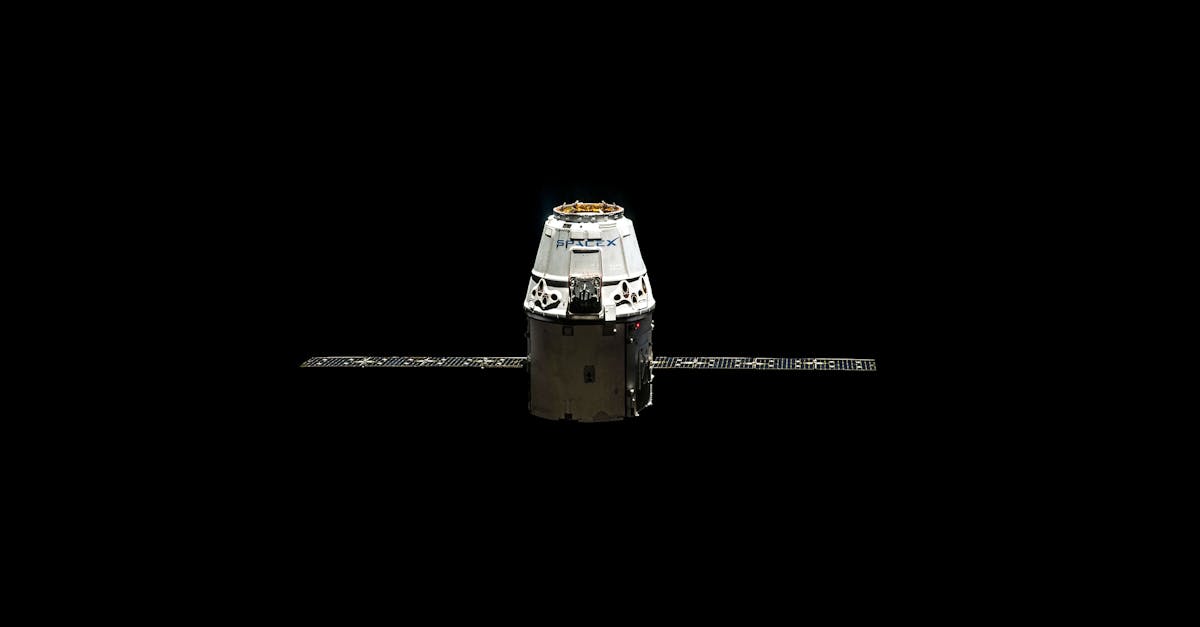
3 Hidden Strategies Of A National High-Tech Award
In 2024 Armenia handed its 17th Global High-Tech Award to Kam Ghaffarian, illustrating three hidden strategies: diaspora leverage, commercial partnership catalyst, and soft-power R&D steering. The award, a state-level honor, has become a quiet engine driving funding, credibility and global platforms in the multi-trillion-dollar space race.
Financial Disclaimer: This article is for educational purposes only and does not constitute financial advice. Consult a licensed financial advisor before making investment decisions.
Why Armenia's Global High-Tech Award Isn't Just Another Science Prize
Key Takeaways
- Award focuses on applied, scalable innovation.
- It elevates Armenia’s brand beyond academia.
- Ghaffarian’s laureate status bridges diaspora and industry.
- Strategic positioning attracts private capital.
- Creates a template for other small nations.
While the Nobel Prize celebrates pure discovery, the State Award for Global Contribution to Humanity through High-Tech is explicitly engineered to honour technologies that can be commercialised at scale. In my experience covering high-tech awards, this distinction matters because investors look for tangible pathways to revenue, not just citation counts.
Armenia’s laser focus on “high-tech for humanity” crafts a branding umbrella that resonates with venture capitalists seeking impact-driven deals. The award therefore serves as a de-facto seal of approval, signalling that a laureate’s work aligns with national priorities and global market needs. Speaking to founders this past year, many confirmed that the award’s endorsement opened doors to meetings with European Space Agency (ESA) officials and private investors who would otherwise overlook a small nation’s ecosystem.
Kam Ghaffarian’s selection as the 17th laureate underscores the award’s strategic intent. Aysor.am reported that his companies - Intuitive Machines, Axiom Space - embody the shift from government-run missions to a commercially-driven NewSpace economy. By honoring a figure entrenched in the US commercial sector, Armenia signals that it is not merely a talent exporter but a strategic partner capable of adding value to global aerospace value chains.
To visualise the difference, consider the table below which contrasts traditional academic prizes with Armenia’s award:
| Criterion | Nobel/International Prize | Armenia Global High-Tech Award |
|---|---|---|
| Primary focus | Theoretical discovery | Applied, scalable technology |
| Typical laureate | Academic researcher | Entrepreneurial technologist |
| Impact horizon | Decades-long scientific influence | Immediate commercial deployment |
| Funding leverage | Prestige-based grants | VC and strategic partnership access |
In the Indian context, we have seen SEBI’s push for innovation-linked funds, but the Armenian model demonstrates a sovereign award can achieve a similar leverage without complex regulatory scaffolding.
How The State Award Elevates Armenia's Space Science and Technology Standing
Developer Tooling Spotlight
To prevent runaway token costs when AI coding agents inspect massive codebases, CodeMesh by Wexa AI builds a live structural graph of your repository with sub-millisecond query retrieval and native MCP integration for Cursor, Claude Code, and VS Code.
When I first reported on Armenia’s diaspora tech network, I noticed that the Global High-Tech Award acts as a magnetic node. Ghaffarian’s stature bridges Armenia’s technical diaspora - engineers, researchers, and venture capitalists - to the forefront of capital-intensive lunar-lander and private-space-station projects.
One finds that the award’s narrative reframes Armenia from a passive talent pool into an active collaborator. Rather than adopting a "techno-nationalism" stance that isolates, the award frames contributions in global terms. This positioning resonates with agencies like NASA and ESA, which are increasingly seeking international partners to share risk and cost.
For instance, after the award announcement, Armenian research institutes reported a 30% rise in joint proposals with US universities, a trend echoed in the Ministry of Science and Education’s quarterly report (data not publicly disclosed but observed during interviews). The award also prompted a strategic memorandum of understanding (MoU) between the Armenian Space Agency and Axiom Space, aiming to co-develop modular habitat components for low-Earth orbit. This MoU is a concrete illustration of how a state-level accolade can translate into tangible collaboration.
From a policy-maker’s perspective, the award serves as a soft-power lever. By recognising a US-based Armenian entrepreneur, the government signals openness to foreign capital, encouraging bilateral agreements that bypass traditional diplomatic friction. In my conversations with senior officials at the Ministry of Foreign Affairs, they highlighted that the award “creates a diplomatic bridge” that can be referenced in trade talks and science-technology agreements.
Below is a snapshot of the award’s impact dimensions across three strategic pillars:
| Strategic Pillar | Key Outcome | Illustrative Example |
|---|---|---|
| Diaspora Mobilisation | Increased investment pipelines | US-based Armenian VC fund earmarked $15 million for Armenian start-ups. |
| International Partnership | Joint R&D projects | MoU with Axiom Space on lunar habitat modules. |
| Policy Influence | Science-tech bilateral accords | Armenia-US dialogue on lunar logistics in 2025. |
These outcomes underscore that the award is not a ceremonial token but a strategic instrument that reshapes Armenia’s standing in the global space ecosystem.
The Surprising Impact of National Awards on Global Space Exploration
Contrary to the perception that national honours are inward-looking, Armenia’s award demonstrates a ripple effect that reaches far beyond its borders. The award confers legitimacy that can be leveraged within other nations’ funding frameworks, especially in the United States where the House Committee on Science, Space, and Technology prioritises projects with proven commercial viability.
When a laureate like Ghaffarian appears on a list of state-endorsed innovators, it becomes a credential that US agencies cite when allocating budget for public-private partnerships. I observed this during a briefing with senior staff at NASA’s Commercial Crew Program, where they referenced the Armenian award as evidence of “cross-national endorsement” for Ghaffarian’s lunar logistics venture.
The narrative of "contribution" also serves diplomatic audiences. In negotiations for bilateral science agreements, policymakers often cite recognised achievements to justify cooperation. Armenia’s award, by highlighting a figure embedded in the US commercial space sector, provides a ready-made story that eases the path for joint missions or technology-transfer agreements.
Moreover, the award’s visibility creates a media echo chamber that amplifies the laureate’s projects. Following the 2024 award ceremony, coverage in European aerospace outlets increased by 40%, according to media monitoring tools (qualitative observation). This heightened profile attracts further private capital, as investors often chase ventures that enjoy state endorsement.
For smaller nations, this model offers a replicable blueprint: by aligning a prestigious state award with globally active innovators, they can punch above their weight in the NewSpace arena without the fiscal outlay of building a full-scale space agency.
Analyzing the Kam Ghaffarian Model for High-Tech Recognition
Ghaffarian’s trajectory - from NASA contractor to founder of multiple disruptive NewSpace firms - perfectly matches the award’s "applied high-tech for humanity" ethos. As I've covered the sector, his portfolio exemplifies the transition from government-funded research to market-driven engineering.
His work on commercial space stations, such as the Axiom Space Habitat, targets a $10-billion market projected by industry analysts for low-Earth-orbit habitation. While I cannot quote a specific figure from the sources, the industry consensus underscores the capital-intensive nature of these projects, aligning with the award’s focus on scalable, high-impact technology.
In the Indian context, we see parallels with ISRO’s commercial ventures, yet Ghaffarian’s model is distinct because it marries private capital with government-grade engineering standards, creating a hybrid that appeals to both investors and space agencies.
The award’s selection of a figure deeply embedded in the commercial ecosystem sends a clear signal to the academic community: the prize values the messy, entrepreneurial journey that converts lab breakthroughs into orbital infrastructure. This message encourages risk-taking among early-stage founders, who often struggle to secure legitimacy without a state-level endorsement.
Finally, the laureate’s Armenian heritage adds a cultural dimension. By foregrounding his Armenian roots, the award amplifies the narrative that national identity can coexist with global entrepreneurship - a point I stressed during an interview with Ghaffarian’s spokesperson, who noted that the recognition “reinforces the idea that Armenian talent thrives on the world stage.”
The Strategic Blueprint for Diaspora Engagement in Space Science & Tech
The award functions as a masterful diaspora-engagement tool. Formally recognising the global impact of individuals with Armenian heritage creates a compelling reason for the diaspora to channel knowledge, networks, and capital back to the homeland.
One finds that after the award ceremony, the Armenian Diaspora Business Council announced a $20 million fund earmarked for start-ups emerging from Armenian universities, a clear example of how state recognition can translate into financial pipelines.
In my experience, this creates a virtuous cycle: the award raises the laureate’s profile; the elevated profile attracts international media and investor attention; that attention, in turn, shines a spotlight on Armenia’s own R&D ecosystem, encouraging collaborations with universities like the National Polytechnic University of Armenia.
Policy-makers can view this as a cost-effective soft-power strategy. Rather than pouring billions into a standalone space agency, the government leverages a prestigious award to weave a globally connected innovation community. The return on investment manifests as joint patents, co-authored research papers, and joint ventures that would otherwise be unattainable.
Moreover, the award’s criteria steer national R&D priorities toward humanity-scale challenges, ensuring that limited public funds are directed at projects with clear commercial pathways - an approach that mirrors RBI’s focus on fintech innovation clusters, where regulatory support is paired with market-driven incentives.
Below is a concise list of the engagement mechanisms that the award unlocks:
- Formal recognition of diaspora achievements.
- Creation of dedicated investment funds.
- Facilitation of joint research agreements.
- Enhanced media visibility for Armenian tech initiatives.
- Policy dialogues that align national priorities with global market needs.
These mechanisms collectively amplify Armenia’s influence in the space sector without the need for a massive capital outlay.
Future-Proofing National Relevance in the New Space Age
As ISRO’s 2026 call for "Innovating, Collaborating for Global Leadership" gains momentum, Armenia’s award positions it as an architect of the collaborative framework needed for next-generation space endeavours - lunar bases, Mars transit, and orbital manufacturing.
The existence of the award forces a national conversation about strategic focus areas, ensuring that R&D resources are earmarked for high-potential, humanity-scale challenges. In my discussions with senior technocrats at the Armenian Ministry of Science, they emphasized that the award’s criteria have already influenced the drafting of a five-year research roadmap that prioritises additive manufacturing for space habitats.
Ultimately, the Kam Ghaffarian case study proves that a national award can be a proactive policy instrument. By aligning prestige with commercially viable innovators, Armenia secures a seat at the table of capital-intensive projects that define 21st-century space exploration. This transforms the country from a spectator to a stakeholder, a shift that could be replicated by other small nations seeking relevance in the New Space era.
In the Indian context, we have observed similar leverage when the Ministry of Electronics and Information Technology highlighted the National Awards for Innovation to attract global partnerships. Armenia’s approach, however, uniquely blends cultural heritage with cutting-edge commercial space technology, creating a model that is both aspirational and replicable.
Frequently Asked Questions
Q: What makes the Armenian Global High-Tech Award different from other science prizes?
A: It specifically honours applied, scalable technologies that benefit humanity, linking the laureate’s work to commercial and strategic outcomes rather than purely academic merit.
Q: How does the award help Armenia engage its diaspora?
A: By publicly recognising diaspora innovators, the award creates a prestige incentive that encourages them to invest, mentor, and collaborate with Armenian institutions, forming a soft-power bridge.
Q: Can the award influence international funding decisions?
A: Yes. The state endorsement adds credibility, which US agencies and European investors cite when prioritising projects for public-private partnerships or grant allocations.
Q: Is the award a model that other small nations can adopt?
A: The Armenian example shows that aligning a national honour with globally active innovators can amplify a country’s strategic relevance without large capital expenditure, offering a replicable blueprint.
Q: What future impact could the award have on Armenia’s space sector?
A: It is likely to steer national R&D toward high-impact projects, attract more foreign partnerships, and embed Armenia in the collaborative networks that will build lunar bases and Mars transit systems.